Classic car towing in Raleigh, North Carolina, gets busy when the car show season rolls around. By mid-June, car enthusiasts are polishing chrome, checking tire shine, and preparing their vehicles for display up and down the Triangle. But getting a classic car to the show safely takes more than a hitch and a flatbed. It's about planning ahead and protecting your investment from the time it leaves the garage until the moment it's parked on site.
The summer heat, heavier weekend traffic, and the age or condition of these vehicles all shape how we approach towing during show season. When cars are older, lower to the ground, or have custom builds, the wrong move during loading, transport, or unload can cause long-term damage. That's why we follow a very specific set of best practices every time we're responsible for a classic car tow.
Know the Risks of Summer Transport
Once Raleigh hits late June, the pavement can get hot fast. That heat doesn't stay on the road, it builds up inside trailers, on vehicle surfaces, and even in the towing gear itself. Older paint finishes and vintage materials aren't made to withstand direct sunlight for long periods. If there's any delay during transport, the heat alone could lead to fading, cracking, or bubbling.
Rubber parts like door seals or bumpers are sensitive in these conditions. Heat and friction from vibrating straps can rub through them faster than expected. And on top of all that, weekend traffic patterns in and around downtown Raleigh or popular venues like the fairgrounds can turn a 10-minute tow into 40. That means longer exposure. It also means you'll want the tow timed to avoid high-traffic hours when possible.
Even the equipment used to secure the car can make things worse if not handled right. Over-tightened hooks or poorly placed wheel straps can cut into tires or bend panel edges when the heat softens surrounding materials. So we plan ahead, use soft grips, and check every point of contact before we get rolling.
Preparing the Vehicle Before Pickup
Before towing a classic car, a few small details go a long way.
- Take pictures of the vehicle from all sides before it's picked up. That way, any issue that shows up afterward has a clear before-and-after to compare.
- Remove or protect loose parts like antennas, mirrors, or trim clips that may come off when exposed to wind or highway pressure. Taping them down or wrapping them safely can help if they can't be removed.
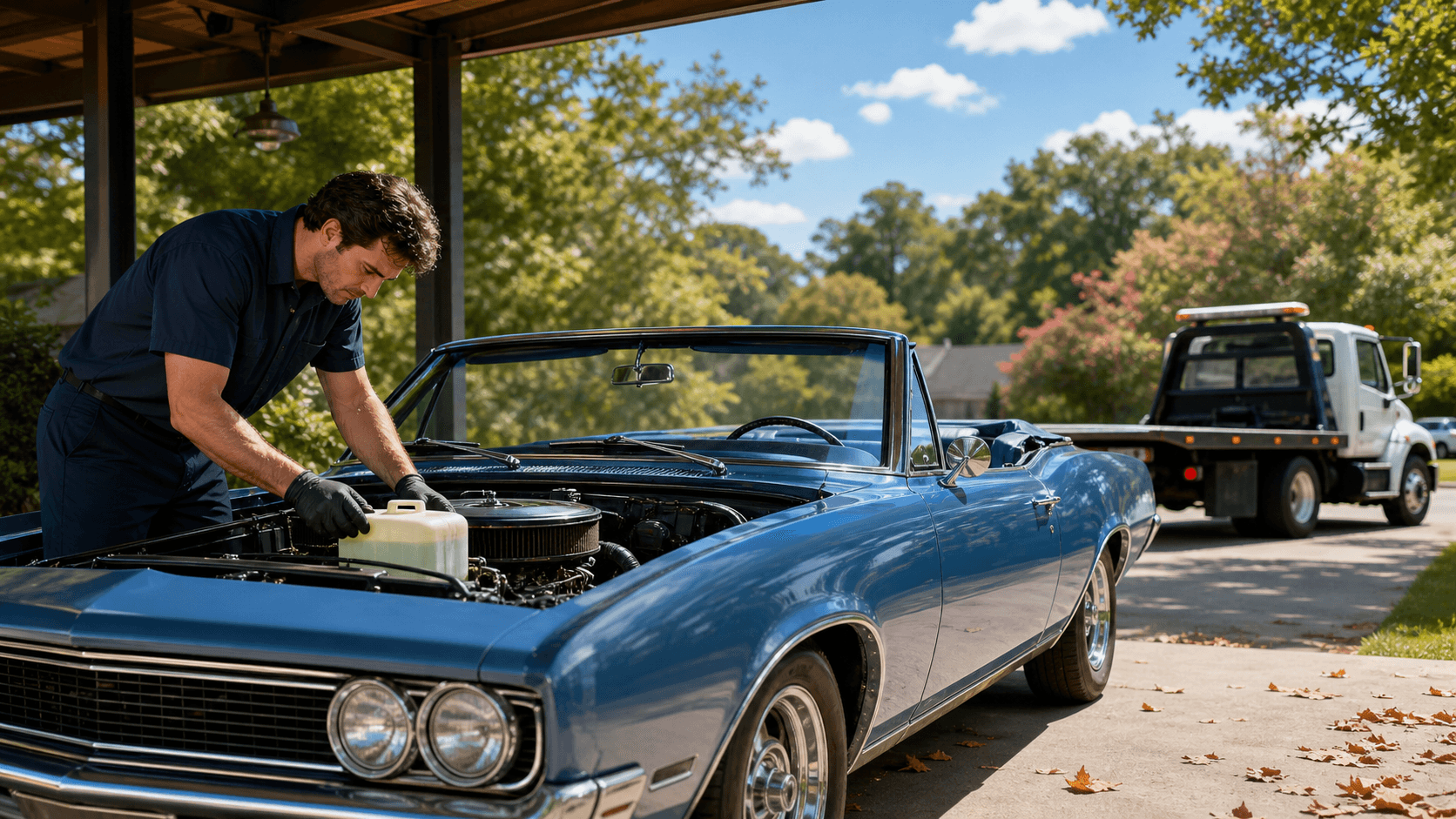
- Check under the vehicle for leaks or soft hoses. Summer heat can make older parts more likely to drip or burst, especially if the car hasn't been driven in a while.
- Inspect for insects or animal nests under the hood or along the frame, especially if the car's been stored all winter. These can cause surprise issues during loading.
- Keep the gas tank no more than half full unless otherwise discussed. This helps with weight balance during flatbed loading and avoids shifting if you're climbing hills.
Being ready before we arrive makes for a smoother, safer transport, and quicker set-up once you're at the event.
Choosing the Right Equipment and Loading Method
Towing a standard vehicle is one thing. With classics, things change. The age, clearance, suspension, and frame type all impact which tow setup we choose.
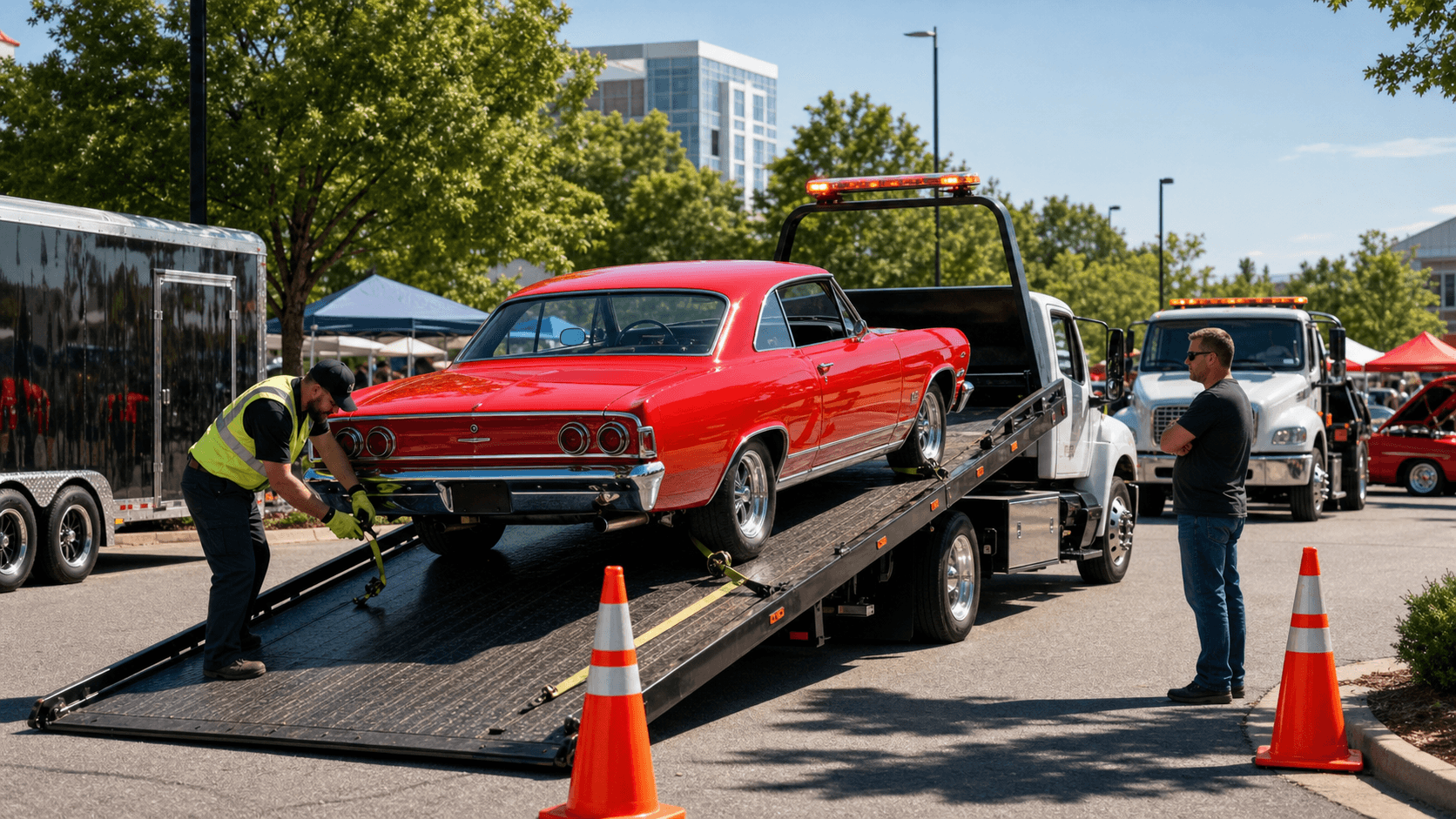
- Flatbed tow trucks are often the best fit since they avoid dragging or lifting the car improperly. But that isn't all, how the flatbed tilts can make or break a safe load.
- Older cars tend to sit lower, so shallow angles are better to avoid scraping bumpers or catching the undercarriage. We adjust for that with ramps or wedges when needed.
- We use soft, wide straps placed at solid anchor points on the frame, not the body. Thin ties or hooks can bend metal or crack old paint.
- The winch should be slow and steady. Fast jerks can shake loose fragile joints or dent fenders if something shifts.
- Roads in Raleigh have minor slopes, especially in older neighborhoods. We take that into account when choosing where to load, always keeping the truck stable first.
Precision really matters here. Slipping once during a load or unload can risk more than just your day at the show.
Protecting the Car in Transit
Once loaded, it's all about keeping the classic protected until we arrive. That means watching weather, wind, and road debris closely.
- We use fitted soft covers when needed to block sun or pollen. These can help cushion the surface too, especially during longer hauls.
- Windy days are common in open Raleigh areas or along highway drives. Cars atop flatbeds can act like sails if not protected, leading to vibration and strap movement.
- Events often run on tight arrival times, but we always give ourselves buffer room so there's no rush before unload. Speeding during final delivery is how damage happens.
- Every time we stop, we re-check every strap and tie-down. During summer drives, straps can loosen faster with heat expansion and highway miles.
- If we know traffic is rough near the venue, we head in early or stage nearby. We don't want to be forced into tight spots when trying to offload something delicate.
No shortcut is worth the risk when you're towing a vehicle whose value depends on condition.
After Unloading at the Show
Once the car's on the ground, there are a few things left to do before you set up for the crowd.
- Walk around the car and check for strap marks, dust trails, or any signs something shifted. It's better to catch a problem early than let it go unnoticed all day.
- Let the car cool off before cleaning the paint or windows. If the surface is too warm, wiping it down can leave streaks or minor scratches.
- Tidy up any towing gear quickly. Tools, straps, or wedges left in a crowded event lot can create trip spots or get lost in the shuffle.
- If the car cover was left on during transit, give the body a light sweep or air-out to remove any static cling or trapped heat.
You've made it to the show, now it's time to focus on the fun stuff.
Keeping Your Classic Car Safe During Show Season
Towing a vintage car to an event isn't just about getting it from A to B. It's about protecting the shape, color, and quality you've worked hard to maintain all year long. Every step, from prep to arrival, matters more when you're dealing with older materials, unique builds, or hard-to-find parts.
During show season in Raleigh, North Carolina, we see more traffic, tighter show setups, and hotter driving conditions. Staying ahead of those challenges makes a big difference in how well your car arrives, and how it performs on display. With a little planning and the right care along the way, your classic car can make a strong entrance without a scratch.
Ensure your classic car shines this show season without a scratch. At East Coast Towing, we specialize in classic car towing that prioritizes safety and care for your prized vehicle. Safeguard your investment from summer heat and hectic traffic while enjoying peace of mind knowing your vehicle is in expert hands. Contact us today to arrange a transport plan that keeps your car ready to impress.