Cold weather changes how a lot of things work in Raleigh, and that includes towing classic cars. When temperatures start to dip in late fall, vintage vehicles don't always respond the same way as modern ones. Their engines, bodies, and even the tires handle colder air differently. That means extra care is needed when they need to be moved. From how they're loaded to what kind of tow they need, every step can shift with the weather.
Classic car towing has its own set of rules once the cold sets in. The way these cars are built makes them more sensitive to temperature changes, and it's important to understand how that affects towing. If your car needs to be relocated, stored, or can't start after an early frost, knowing what to expect can make things smoother and safer.
How Cold Temperatures Impact Classic Car Components
Most classic cars weren't built with winter in mind. Materials age, and after years of wear, they react to cold in ways newer parts don't.
- Older batteries and wiring are often the first to struggle on chilly mornings. What worked perfectly in warmer months might not respond the same once the temperature drops.
- Belts and hoses, especially if they've never been replaced, become brittle and more likely to snap with the sudden contraction cold air brings.
- Thickened fluids can slow everything down. Oil, gearbox fluid, and even brake fluid might not flow as well, adding more stress to parts already under pressure.
Paint and chrome are another issue. The surface of a classic car isn't just about looks. Cold weather causes those materials to contract, which can make them more vulnerable to scratches or changes in texture when being handled. Even a soft strap or a shift in weight during loading can leave a mark.
Towing Techniques That Shift During Cold Weather
The way we tow classic cars isn't the same year-round. As late fall arrives in Raleigh, we have to start making adjustments.
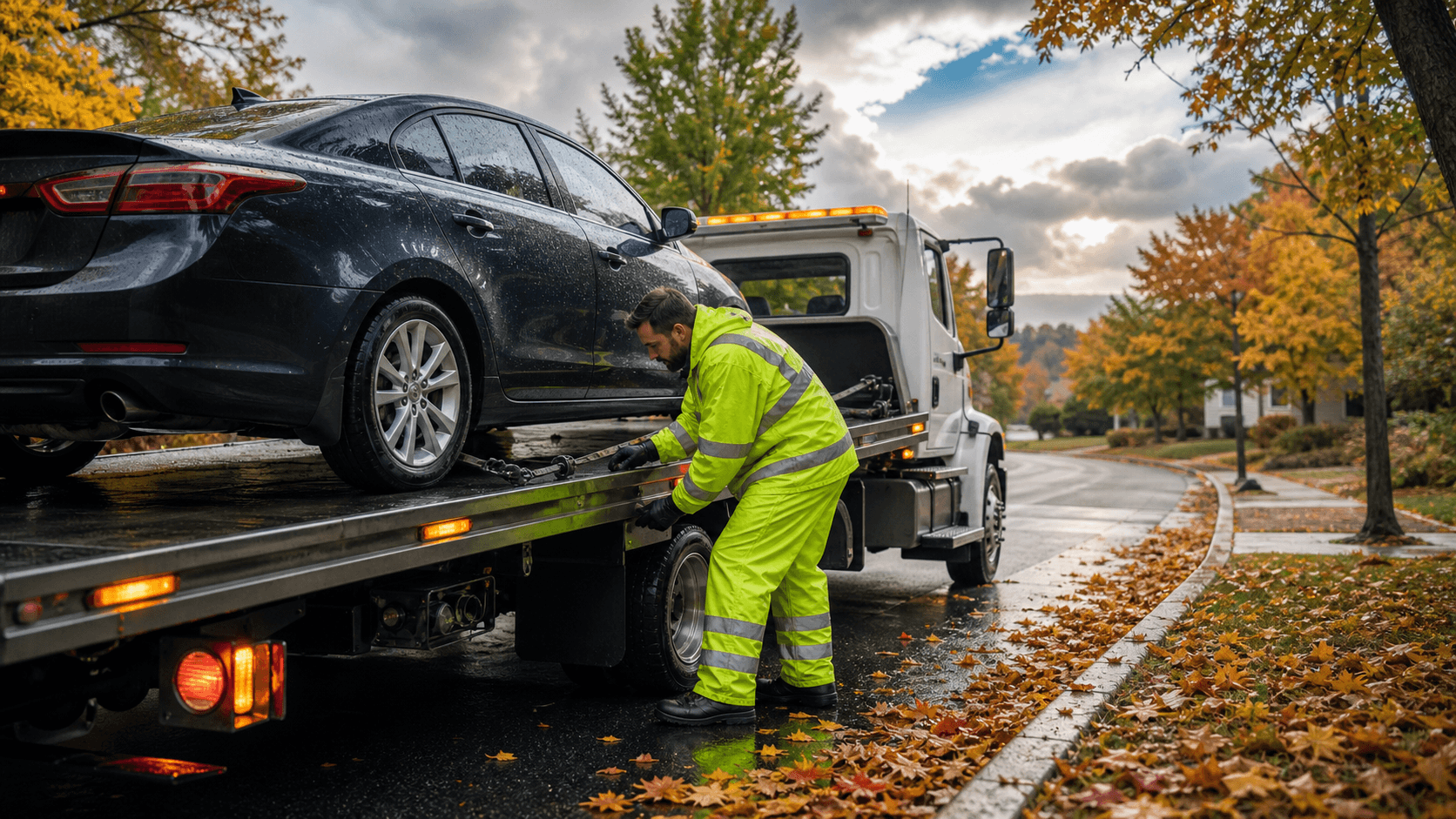
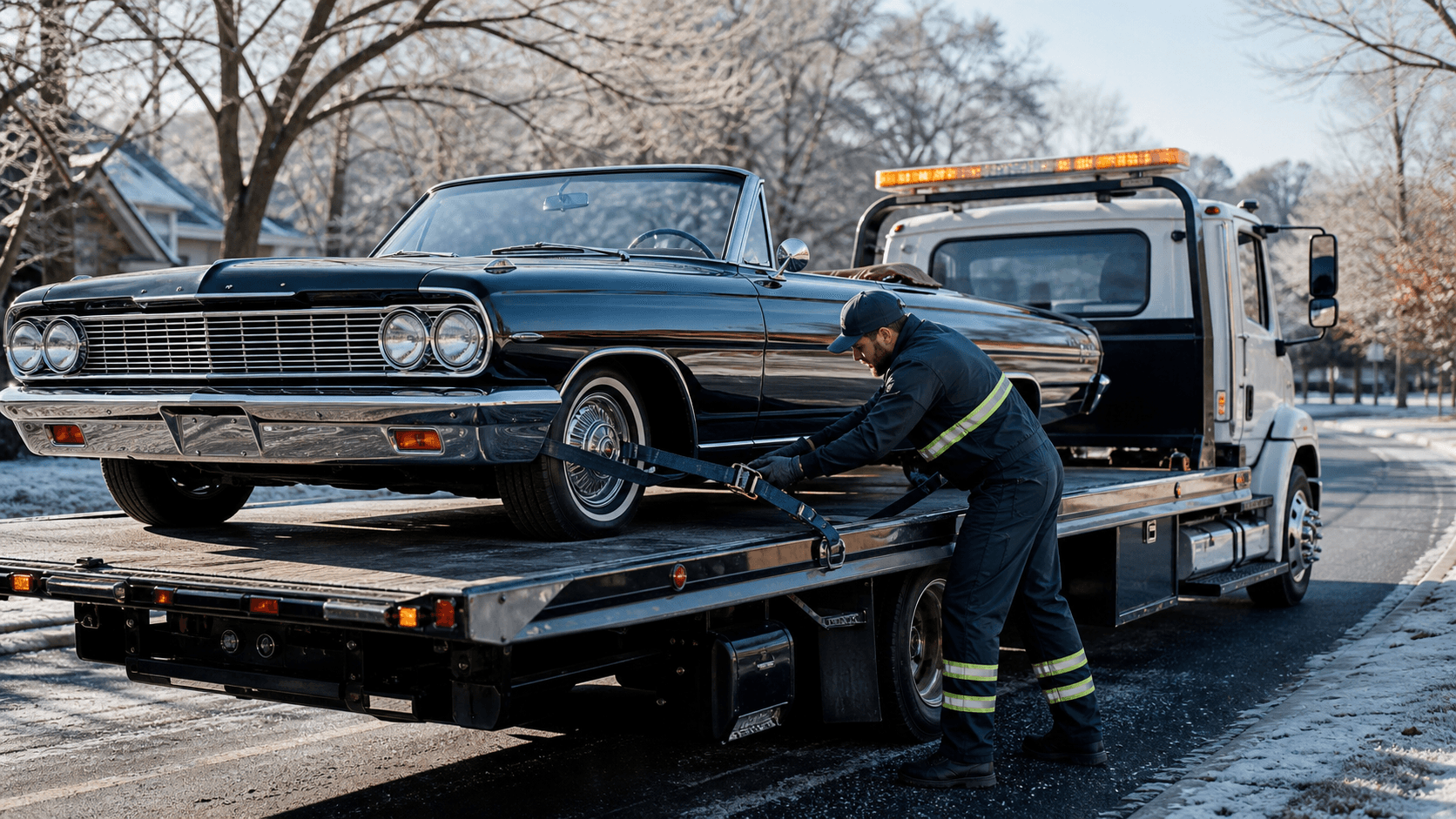
- Flatbeds are often the better option for transporting classics, but ramps can get slick with frost. That means we may need more time or equipment to safely load a vehicle without slipping or scraping the front end.
- Wheel-lift methods might work for some cars, but not if they're rear-wheel drive or low to the ground. In cold weather, ice or wet leaves can make it harder to keep things in line during positioning.
- Certain makes or models shift balance easily, and colder tires have less give. Keeping a car steady during transport sometimes calls for tighter strapping or changes in trailer weight level.
Cold roads are part of the problem, too. In residential areas or shaded hills near Raleigh, the pavement might still be icy long after the sun is out. That makes turning, backing up, or loading a car harder than it would be on a warm day.
Increased Storage and Transport Needs Between Seasons
As fall turns to winter, a lot of classic car owners don't want to risk resting their vehicle outside. Salt, rough weather, and heavy rain can do lasting damage to something that's not made for today's roads or conditions.
- Storage needs go up in late October and November, and many owners request help getting their vehicles from driveways or garages to safe buildings.
- Scheduled restorations or showings often get delayed until spring, so cars that were meant to be moved early end up waiting and needing last-minute transport.
- Early cold snaps can create no-start conditions, especially in older cars that haven't had a full tune-up in a while. Frozen lines or drained batteries tend to show up suddenly this time of year.
We often see requests increase when the weather shifts quickly, like when Raleigh gets its first frost. People want to move their cars before there's long-term weather exposure or mechanical trouble.
Things to Watch for When Scheduling Cold-Season Tows
Towing in colder weather brings a few more obstacles than usual. Even though Raleigh doesn't get piles of snow often, we still deal with freezing rain, frost layering, and muddy surfaces.
- Cars parked on gravel, wet grass, or sloped driveways can be trickier to access. Frozen ground creates uneven balance, not just for the tow truck, but for the person trying to hook the vehicle up.
- Snow or frost might cover curbs, dips, or debris under a vehicle. If those areas aren't cleared before towing, the underside of a classic car could get bumped during loading.
- Planning ahead is smart around this time. Weather can turn quickly, and roads may get slick overnight. A scheduled move during daylight is usually safer than trying to rush it once temperatures drop.
We also try to consider street conditions around the pickup site. If the neighborhood has a lot of trees or sits low in elevation, there might be shaded icy patches that change how we approach the tow.
Keeping Your Classic Safer When Fall Brings a Chill
Cold weather changes things fast. The way we move and handle classic cars needs to change with it. Every part of the process, from lifting to loading to driving, carries a little more risk once the air gets colder, especially when dealing with the limits of older parts and fragile features.
Classic car towing in the cooler months around Raleigh calls for a slower, more careful touch. Knowing how the weather affects every part of a vintage car helps all of us make smarter decisions before something goes wrong. Whether it's for storage, safety, or just preventive care, timing matters once fall takes hold.
When the cold sets in and it's time to move your valuable classic car, trust East Coast Towing to handle every detail with precision and care. We specialize in providing secure and expert classic car towing, ensuring safe transportation even in Raleigh's cooler temperatures. Let's make sure your classic vehicle gets the attention it deserves, avoiding unnecessary risks and keeping it in pristine condition. Reach out to us when you need a reliable team ready to assist.