Late summer doesn't always feel like a friend to classic car owners in Raleigh, North Carolina. That sticky heat hangs on well into September, and each drive feels just a little more risky. One minute you're out enjoying the road, the next you're pulled over with steam rising and no shade in sight. Older vehicles are beautiful, but they weren't made with modern weather in mind. It's no surprise we see more classic car towing requests during this time, when unexpected stalls and overheating catch people off guard. Whether you're headed to a show, a backroad cruise, or just clearing the cobwebs off your engine, now's the time to think about how those final summer days can affect your ride.
This is the season where a few extra steps can go a long way. Taking care of your car in this heat means more than checking the basics. It's about thinking ahead before the next drive, knowing what to do when things go wrong, and deciding whether fall will be for storage or more time on the road.
Know What Late Summer Does to Older Cars
Most classic cars were built in a time when engines didn't deal with today's high levels of stop-and-go stress or long highway exposure under heavy sun. As temps hover in the 80s and 90s, that old radiator might have a hard time keeping up. Hoses that look fine most of the year can start cracking under the heat, while wiring gets brittle when it bakes for weeks.
Other systems feel it too. Late-summer storms come fast in North Carolina. After a long dry spell, the roads get slick quick. That sudden soak followed by heat can also raise humidity in stored cars, pushing moisture into the interior or fogging up gauges, especially if rubber seals aren't tight anymore.
There's also the issue of timing. August is packed with regional car events and last-minute trips to the coast. Breakdowns this late in the season can mean missing plans you waited all year for.
Prep the Car for End-of-Summer Driving
We always suggest being proactive before taking a late-summer drive in a classic. You want the car to run, protect its paint and interior, and not give you trouble once you leave the house.
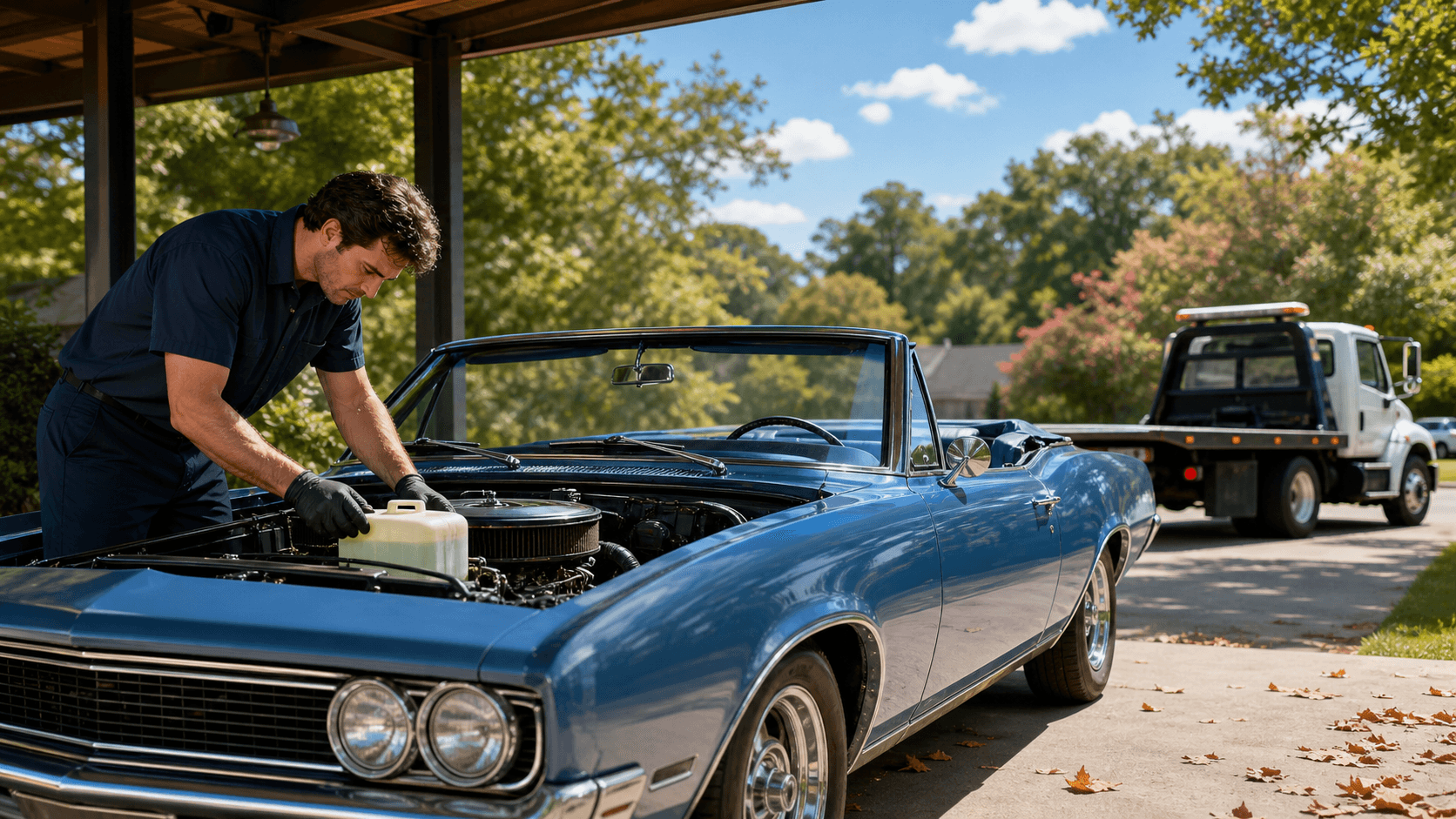
- Check coolant levels and make sure the radiator is doing its job.
- Inspect belts and hoses. Warm weather wears them faster, especially if they're already a few years old.
- Give the tires a close look. Tire rubber can separate when it's hot, and classic cars often sit between drives.
- Test the ignition system before hitting the road. Weak spark or old wiring is common in vintage models.
Don't ignore the interior either. Letting the inside air out before driving helps cut down on mildew. If the car stays closed on hot, humid days, you've got the perfect recipe for mold under carpets or on soft trim. And if you're only able to drive it now and then, be sure to take it out for short rides every week or so. That keeps the fluids moving and helps keep gunk out of the fuel system.
What to Do When the Car Fails Mid-Drive
Even when you plan well, things can go wrong. When they do, it's key to stay calm and protect the car from more damage. If it stops running while you're out, don't keep cranking the engine. Pull safely off the road, ideally onto level ground, and pop the hood to release heat.
Let everything cool before you try anything. If the fan isn't spinning or steam's coming out, it's not something worth pushing through. That kind of stress can do more harm than good. This is where knowing when to call for help matters, especially if you're miles from home.
We've seen more than a few cases where a standard tow wasn't the right fit. Classic cars often have low clearance and exposed underbody parts, making them trickier to move. If you're stuck outside Raleigh or along a backroad, a service that knows how to handle classic car towing is the safest way to get it home without adding any scratches or mechanical issues.
Storing or Driving the Car Into Early Fall
As summer winds down and temperatures start to dip, you've got a choice to make. Some drivers opt to store their classics through the fall, while others enjoy the cooler air and stretch the season into October.
If you decide to store the car, it pays to think beyond just covering it. A few smart steps include:
- Using a breathable car cover if you're storing outdoors to avoid trapping moisture.
- Disconnecting or trickle-charging the battery to keep it from draining.
- Keeping the fuel tank at least half full with a small amount of stable additive to hold off on fuel breakdown.
If you're still planning to use the car through September, you're in luck. The fall stretch in North Carolina is great for driving. Just be sure those late-summer fixes were taken care of and that you're not ignoring signs like delayed starts or leaks. These smaller issues have a way of turning into bigger ones whenever the weather swings.
Keep Your Classic Road-Ready While Seasons Shift
This is the part of the year where cars get tested. The heat's already done its damage, and the cooler months haven't kicked in yet to give them a break. For older vehicles, that's where most of the problems start. When parts have been strained for weeks, one extra hot drive or one hard rain can be the last push.
We always tell classic car owners that the end of summer is more than just another month. It's a chance to catch up, get things sorted before fall traffic thickens, and avoid roadside delays that suck the joy out of the drive. Keep up regular checks, take short trips when possible, and don't push a car that feels off. A little care now makes early fall driving a lot more fun, and a lot less stressful.
With late summer heating up your classic car's journey, don't let unexpected stalls or overheating ruin your plans. East Coast Towing is here to ensure your vintage vehicle makes it home safely and without damage. Our team specializes in safe, reliable classic car towing, so you never have to worry about your prized possession on the road. Trust us to handle your car with the care it deserves, keeping your drives smooth and your vehicle secure.