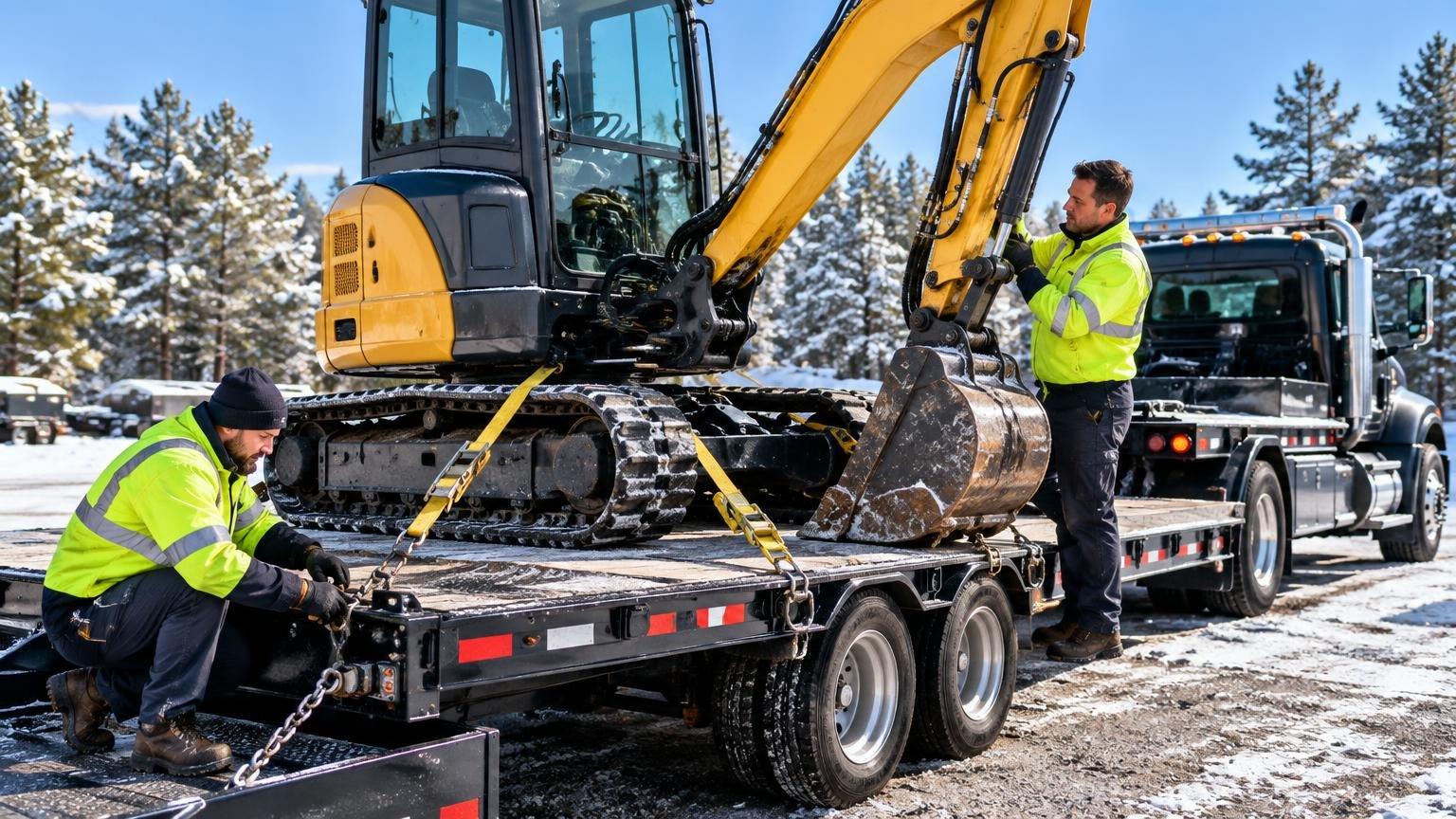
Winter hauling brings its own set of problems, especially when we're moving heavy equipment across North Carolina. Shorter days, freezing temperatures, and unpredictable weather all create extra risks that don't exist during the warmer months. If a machine breaks down during a haul, it can easily stop a job in its tracks.
Before the season shifts fully into winter, we take time to run through all the key steps that help reduce the chance of breakdowns and delays. It's amazing how many issues can be traced back to skipped steps during winter prep. We see this each year with heavy equipment towing in NC, especially during the early months of freezing conditions. Taking the right steps in advance helps prevent bad surprises. Winter weather is all about being one step ahead, so every safe haul really starts with careful winter preparation. At this time of year, even small skips in routine can create large, costly problems when out on the job.
Check Fluids and Fuel Systems Before Leaving the Yard
Cold weather changes how fluids behave. What runs well in September can freeze or thicken in late November. That's why we run through fluid and fuel checks for each machine before it goes anywhere.
- Make sure coolant levels are correct and include the proper antifreeze blend for cold conditions
- For diesel engines, drain any older fuel or treat it with additives to prevent gelling
- Test the fuel lines and heaters to confirm flow while idling or during transport
When temperatures drop, we don't want to find out halfway through a haul that a heater isn't working or fuel lines are clogged. A simple test before leaving the lot can prevent a full breakdown miles down the road. Cold temperatures can also cause condensation in the fuel tank, creating water buildup that leads to engine trouble or even freezing. Periodic checks and scheduled fluid maintenance become especially important in these conditions. Checking caps and hoses for tightness avoids minor leaks that may go unnoticed in warm weather but turn into significant problems when the air turns frigid.
Inspect Tires, Tracks, and Undercarriage for Cold-Weather Challenges
Surfaces that carry equipment take a beating year-round, but winter can push them further. We inspect each set of tires or tracks before hauling and especially focus on any parts under the machine.
- Look for cracks, dry rot, or worn treads that may get worse in cold air
- Adjust tire pressure to account for freezing temperatures, which tend to lower PSI overnight
- Clean out any mud, rocks, or compact debris from the undercarriage before things freeze up
If dirt freezes between wheels or track links, it creates all sorts of problems. That trapped moisture can damage parts or reduce secure footing while in transport. Taking 10 extra minutes to check this area has saved us a lot of trouble. Frozen debris can also make it harder for equipment to stay secure on trailers, which adds to the risk. Even when there's not snow or ice on the ground, moisture from rain or fog can freeze quickly once machines are parked or loaded, so a clean undercarriage means better grip when loading, moving, or unloading equipment.
Secure Weight and Clearance to Handle Winter Conditions on the Road
Winter roads demand more from the tow vehicle and the equipment being moved. Balancing the load correctly and double-checking it is one of the most important parts of our process when hauling larger machines this time of year.
- Distribute weight evenly to prevent the equipment from tipping or sliding
- Lock down all loose tools, panels, and parts that could become dangerous during travel
- Measure total height and check for slush or snow build-up that can change clearance
Snow or ice on top of a load might not seem like a big deal until it scrapes against a bridge sign or throws off your measurements. We make a point to clear everything before rolling out, even if it slows us down slightly. Carefully checking chains, straps, and binders to ensure nothing has stiffened or loosened due to freezing air helps avoid shifting loads that can be dangerous during sudden stops or sharp turns. One more thing, extra care should be given to tire chains or traction mats if equipment needs to travel over icy patches after unloading. These details make sure a secure load stays secure from start to finish.
Prepare Batteries and Electronics for Cold Starts
Low temps can drop battery performance fast. We've had plenty of cases where a battery looked fine in storage but failed on the road. We run diagnostics on all battery-powered machines before transport, especially during cold months.
- Test that batteries hold a charge long enough for both startup and short idle times
- Use covers or wraps to keep batteries warm on trucks if temps drop overnight
- Inspect wiring and connections for moisture or rust that could lead to electronic failures
It's easy to overlook electronics, but one missed connection can shut down the entire electrical system. That's not something we want while parked on the side of a rural road in wind and sleet. When checking battery terminals, looking for tightness and signs of corrosion makes a big difference. Sometimes, machines parked for even a day can lose starting power if batteries are left exposed to cold winds. That's why charging and prepping batteries becomes part of every winter checklist, not just something done if there's a problem.
Watch the Weather and Plan Extra Time for Every Haul
Weather in Raleigh, NC, can shift quickly between mild and icy, especially after mid-November. Unexpected snow or sleet slows down traffic, blocks roads, and causes more urgent calls for help. We always build in extra time and monitor weather closely before we send anything out.
- Add buffer time to each trip to allow for delays from icy roads or traffic stops
- Keep cold-weather gear like gloves, blankets, and flashlights in towing or support vehicles
- Avoid known trouble spots like mountain passes or narrow country roads with higher freeze risk
When mapping routes, we try to avoid areas that are slow to get plowed or are likely to freeze overnight. We've rerouted jobs before just to bypass one risky stretch of poorly treated road. Having backup supplies for drivers in case of delays is also part of smart planning. Winter weather emergencies happen fast, so being prepared with supplies, route alternatives, and emergency communication helps prevent a small setback from turning into a major problem.
Safer Hauls Start with Winter-Ready Equipment
Winter hauling in North Carolina always brings a different pace. Colder days, early sunsets, and harder ground mean less margin for error. We take these conditions seriously and treat winter prep as part of the load itself.
A careful equipment check now saves hours of waiting later. Whether it's adding antifreeze, checking tire pressure, or wiping snow off rigging chains, it's all part of keeping our hauls smooth and safe. We know from experience that prepping early and hauling smart makes all the difference once real winter hits.
Ensure your heavy equipment moves smoothly and safely through North Carolina's winter challenges with the expertise of East Coast Towing. We understand the unique demands of cold-weather hauls and are prepared to assist with reliable support and skilled service. Trust us for heavy equipment towing in NC that gets the job done, no matter what the weather brings. Contact us for dependable towing solutions throughout the chilly season.